
Our Concrete
Guides
Practical, plain-language guides on ordering, placing and caring for ready-mix concrete — written by the people who batch and deliver it across Gauteng every day.
Pump Mix vs Standard Concrete: When to Use Which
- Quick-Mix Team
- September 7, 2026
- 5 min read
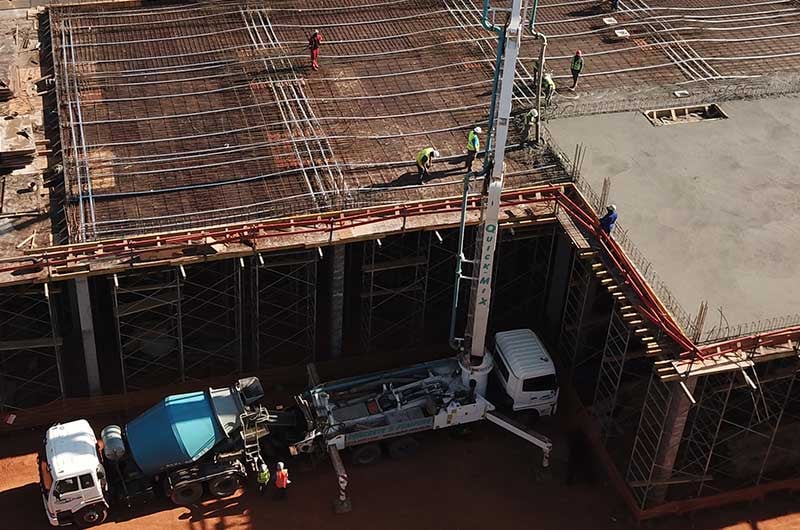
When the concrete truck can reverse right up to your pour, standard mix discharged down the chute works perfectly. When it can't — over a house, into a backyard, up a storey — the concrete has to travel through a pump, and concrete that pumps well is a different design. Our concrete pumping service supplies both the pumps and the right mix.
What Makes a Mix Pumpable
Pumping pushes concrete through a pipe under pressure. A standard mix can segregate under that treatment: the coarse aggregate jams while the paste shoots ahead. A pump mix is engineered with a richer paste content and graded aggregates so it moves as one coherent mass — through 100 m of pipeline and around bends without blocking.
When You Need a Pump Mix
- The truck has no direct access to the placement area
- Concrete must go up — boom pumps from 24 to 48 m reach over obstructions and onto upper floors
- Long horizontal runs — stationary or trailer-mounted pumps push up to 300 m of pipeline, around corners and into basements
When Standard Mix Is Fine
Direct chute access, flat site, reasonable distance from the truck to the pour. Wheelbarrowing standard mix a few metres is normal practice; wheelbarrowing it 50 m is not — that's a pump job.
The Cost Trade-off
Pump mix carries a modest premium per cubic metre over standard mix of the same strength, and pump hire is a separate line item. But the alternative — slow placement, a crew barrowing all day, and the risk of cold joints as each truck's load takes too long to place — usually costs more. Read our FAQ for common pumping questions, or request a quote covering mix and pump together.
Technical review pending — this article is awaiting sign-off by Quick-Mix technical staff before deployment.